A cannabis package has two jobs. The obvious one is compliance and shelf appeal; the quieter one is preservation. Flower is a botanical product, and from the moment it is cured it is under attack from four things: moisture, light, oxygen, and heat. A dispensary can control the temperature, but by the time a jar or bag reaches a customer’s shelf, the packaging is the only defense left standing against the other three. Understanding what each enemy does, and which one your package can actually stop, is the difference between a brand known for fresh, aromatic flower and one quietly known for dry, faded product.
Humidity lives in a narrow band
Cannabis wants a relative humidity most people would find surprisingly specific. The industry-referenced target sits at roughly 55 to 65 percent, and laboratory work narrows the sweet spot further, to somewhere around 59 to 63 percent. That band is narrow because both edges are punishing. Drift above about 65 percent and the extra moisture invites mold and mildew, the kind of contamination that fails a compliance test and endangers a consumer. Drop below about 55 percent and the flower dries out, the trichomes turn brittle and harsh, and the volatile oils that carry aroma and effect evaporate away. The chart below shows why the middle is the only comfortable place to be.
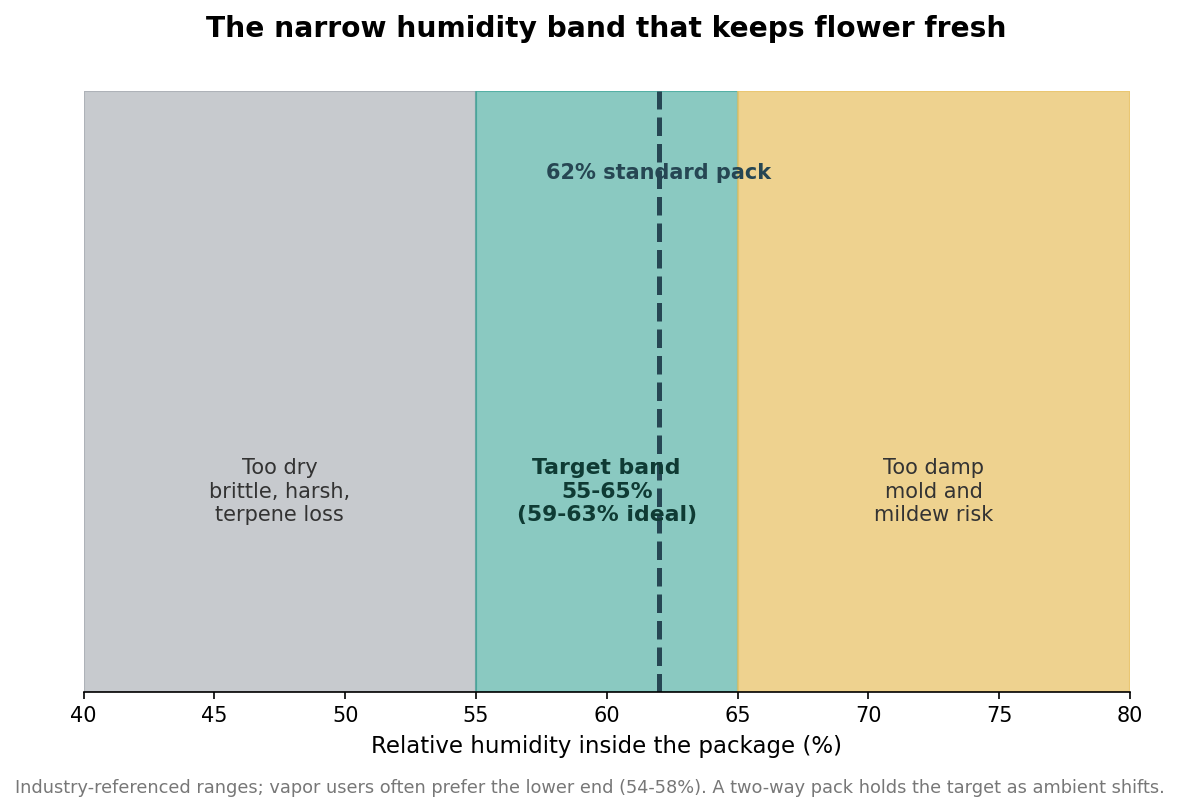
The practical tool is a two-way humidity pack, which both releases and absorbs moisture to hold a target as the surrounding air changes. A 62 percent pack is the common default for flower, while people who vaporize their product often prefer a drier 54 to 58 percent. Including the right pack sizes the package to the product rather than leaving humidity to chance, and it is one of the few preservation choices a brand can build directly into what ships.
Light is the enemy your bag can block
Of the four threats, light is the one packaging defeats most completely. Ultraviolet and even visible light break down cannabinoids, and a frequently cited study from the 1970s concluded that light was the single largest factor in the loss of cannabinoids from stored cannabis. Sunlight is the worst offender, but fluorescent and other indoor lighting contribute too, which matters for product sitting under retail display lights for weeks. The fix is simply opacity. An opaque or heavily tinted package blocks the light before it ever reaches the flower.
This is where clear packaging carries a real cost. A transparent jar or window bag shows off the product, but it also lets in exactly the wavelengths that fade it, so the same feature that sells the flower on the shelf degrades it on the shelf. Brands that want visibility can compromise with amber or smoke tints, small windows rather than clear fronts, or an opaque outer that is only opened at purchase. The point is to treat clarity as a deliberate trade, not a free one.
Oxygen and headspace
The more oxygen the flower sits in, the faster it oxidizes. Air is why barrier matters. A high-barrier film or a genuinely airtight jar slows the exchange of oxygen and moisture between the flower and the outside world, which is the whole reason metallized mylar and foil laminates dominate the category over thin single-layer plastics. The barrier is not just about keeping smell in; it is about keeping air out, and a resealable, well-sealed closure preserves that barrier every time the customer opens and closes the package.
Headspace, the empty air volume inside the package, is the overlooked half of this. A large bag holding a small amount of flower traps a lot of oxygen against the product, and each reseal refreshes that air. Sizing the package close to the fill, or keeping a rigid container around three-quarters full, limits the oxygen the flower has to react with. It is a free improvement that comes purely from matching package volume to product volume rather than defaulting to one oversized format.
Heat and time, the limits of any package
Some degradation no package can prevent. Heat accelerates every other reaction, so the storage target is cool, roughly the mid-fifties to low-sixties Fahrenheit, with sustained temperatures above about 86 degrees to be avoided and brief exposure to real heat, in the region of 110 degrees, doing quick damage. Packaging can insulate a little and can keep light and air out, but it cannot refrigerate, so the honest message to pass to a customer is to store the product somewhere cool and dark once it leaves the store.
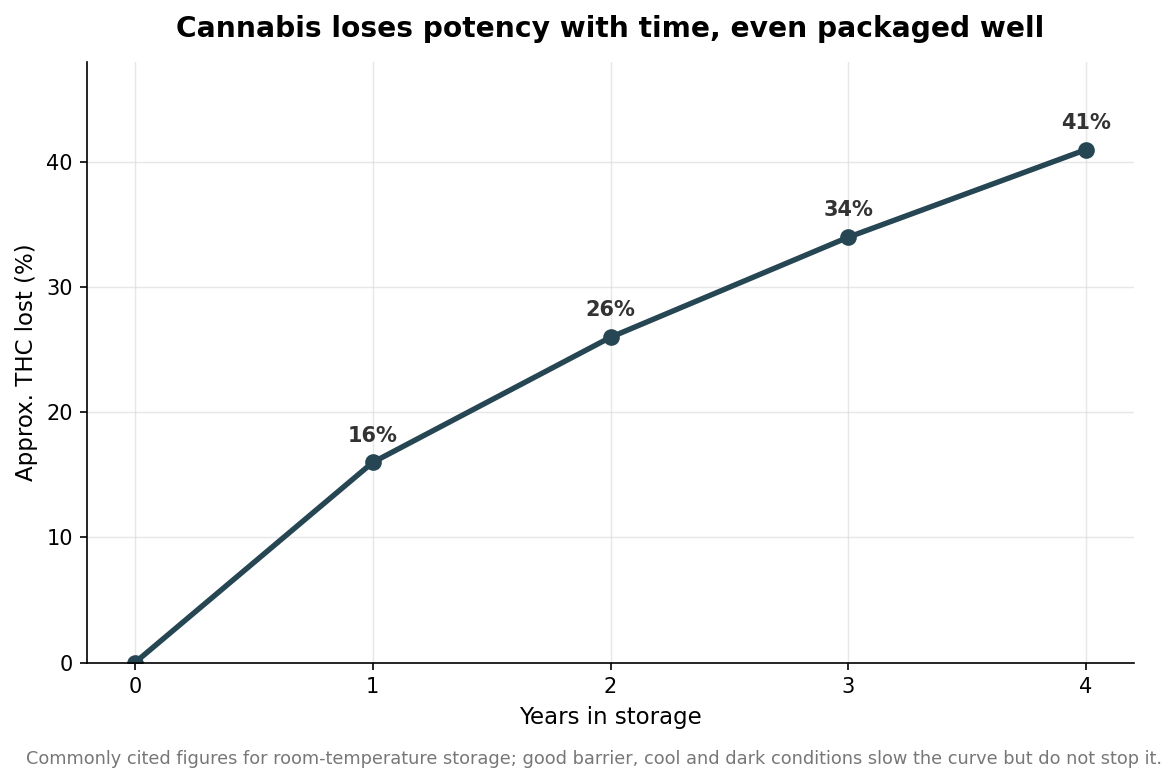
Time is the factor nothing defeats. Even under good conditions, potency drifts downward on a fairly predictable curve, with commonly cited figures showing meaningful losses that compound year over year, as the chart below illustrates. Well-designed packaging bends this curve, keeping flower at its best for the first several months to a year, but it does not flatten it. That is exactly why matching production and order sizes to real sell-through matters as much as the film specification does.
Building a package that actually preserves
Preservation is a system, and the pieces reinforce each other. A high-barrier, opaque film handles light and slows oxygen and moisture exchange; an airtight, resealable closure protects that barrier through repeated use; a correctly rated humidity pack holds the flower in its 55-to-65-percent comfort zone; and a package sized close to the fill keeps trapped oxygen to a minimum. Leave any one of those out and the others work harder for less result, because the weakest link sets the pace of decline.
None of this competes with compliance or branding; it sits underneath them. A child-resistant, correctly labeled, beautifully printed bag that still lets in light and air will disappoint the customer who opens it three weeks later. Specify the package to protect the product first, then make it compliant and make it beautiful, and the flower a customer opens will smell and perform the way it did the day it was sealed.
Leave a Reply